
Designing for Aging: Hospitality-Driven Senior Living Is Here to Stay
The future of senior living looks a lot less like a traditional care facility and a lot more like a boutique hotel, and that shift is intentional. As the industry evolves, one thing has become clear: hospitality isn’t just influencing senior living design; it’s reshaping it entirely.
Today’s residents want environments that honor their independence, reflect their lifestyles, and offer choices that feel familiar. They’re looking for comfort, flexibility, and experiences that mirror the hospitality settings they’ve enjoyed for decades. More than any single amenity, the overall atmosphere of senior living is changing: warm finishes, crafted details, welcoming social spaces, and curated experiences are now the standard.
At the heart of this change? Hospitality-driven design that prioritizes choice, autonomy, and connection.
And few areas demonstrate this shift more powerfully than dining.
Why Hospitality Matters More Than Ever
Senior living residents are savvy consumers. Many have traveled widely, dined well, and maintained active social lives well into their retirement years. They expect environments that support who they are.
Hospitality-driven communities recognize that “home” means more than a resident room; it’s the everyday moments that shape quality of life. It’s deciding whether tonight feels like a casual meal with friends or a more elevated dining experience with family.
When design elevates these small but meaningful choices, residents feel empowered, something that becomes increasingly important as people age.
Dining as an Experience, Not a Service
Dining has always been a central part of senior living. But today, it carries new weight. We’re designing for a generation that associates food with culture, connection, and lifestyle. One venue can’t do it all, and that’s why hospitality-inspired variety is changing the game.
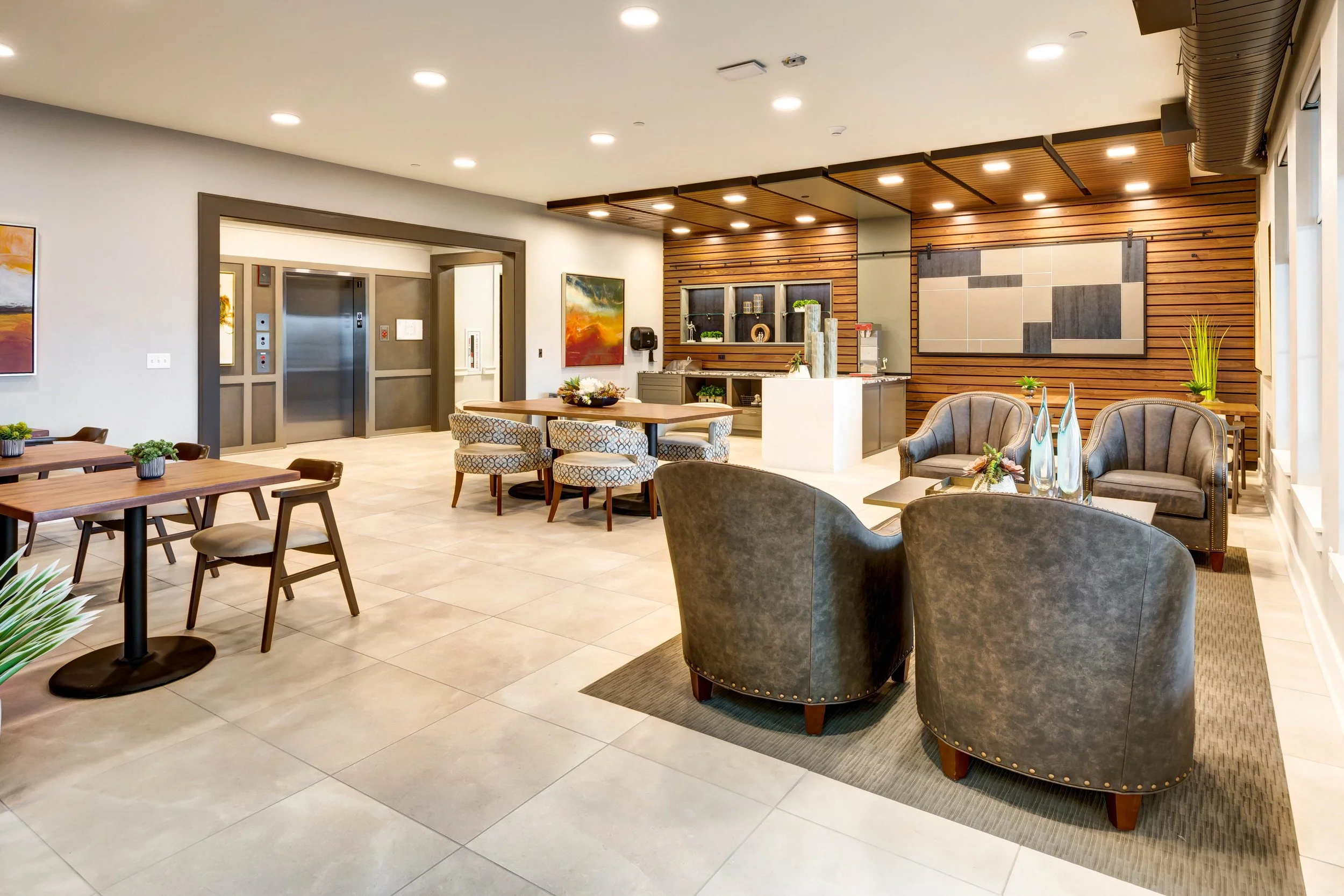
1. The Bistro
The bistro is the heartbeat of the community. It provides:
Casual, grab-and-go convenience for residents who want a quick breakfast or light lunch
A social hub where people bump into neighbors and staff
Familiar café-style design cues warm woods, café tables, displays of fresh pastries, and coffee bars
Bistros encourage independence. They also give families and visitors a relaxed place to gather without the formality of a dining room. For many residents, this space becomes an anchor: a comforting, approachable spot that feels like part of their routine.
2. The Casual Dining Room
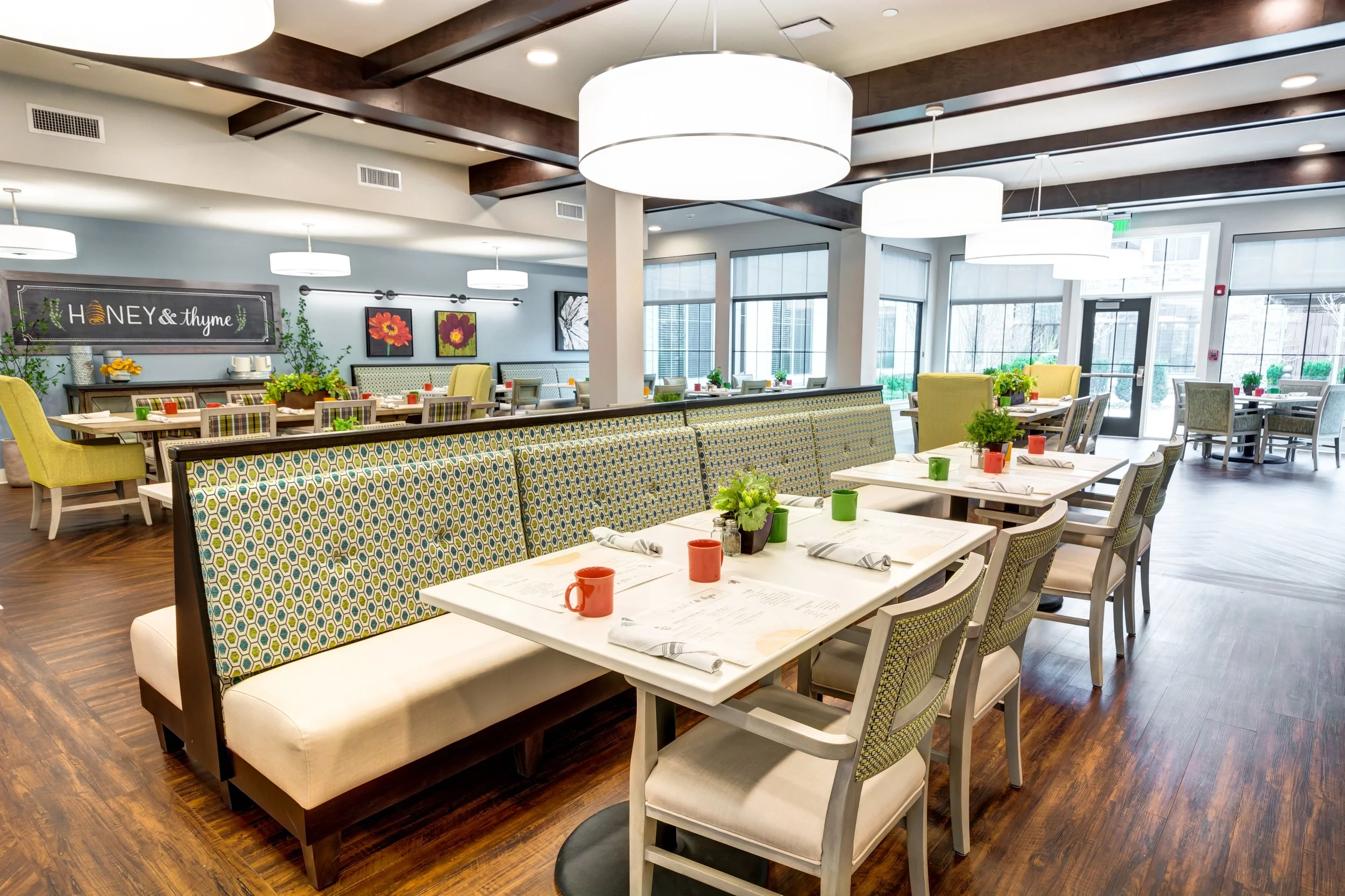
This is where most daily meals take place, but hospitality design transforms the experience. Instead of one large room, we’re designing smaller, more intimate zones that break down scale and noise while creating a sense of comfort.
Key benefits include:
Resident choice—pick where you want to sit, who you join, or how long you stay
A warm, residential feel that reduces the clinical look of institutional dining
Flexibility for programming, from themed meals to family-style gatherings
Casual dining spaces bring structure to the day, but in a way that feels social, not scheduled.
3. The Formal or Signature Dining Venue
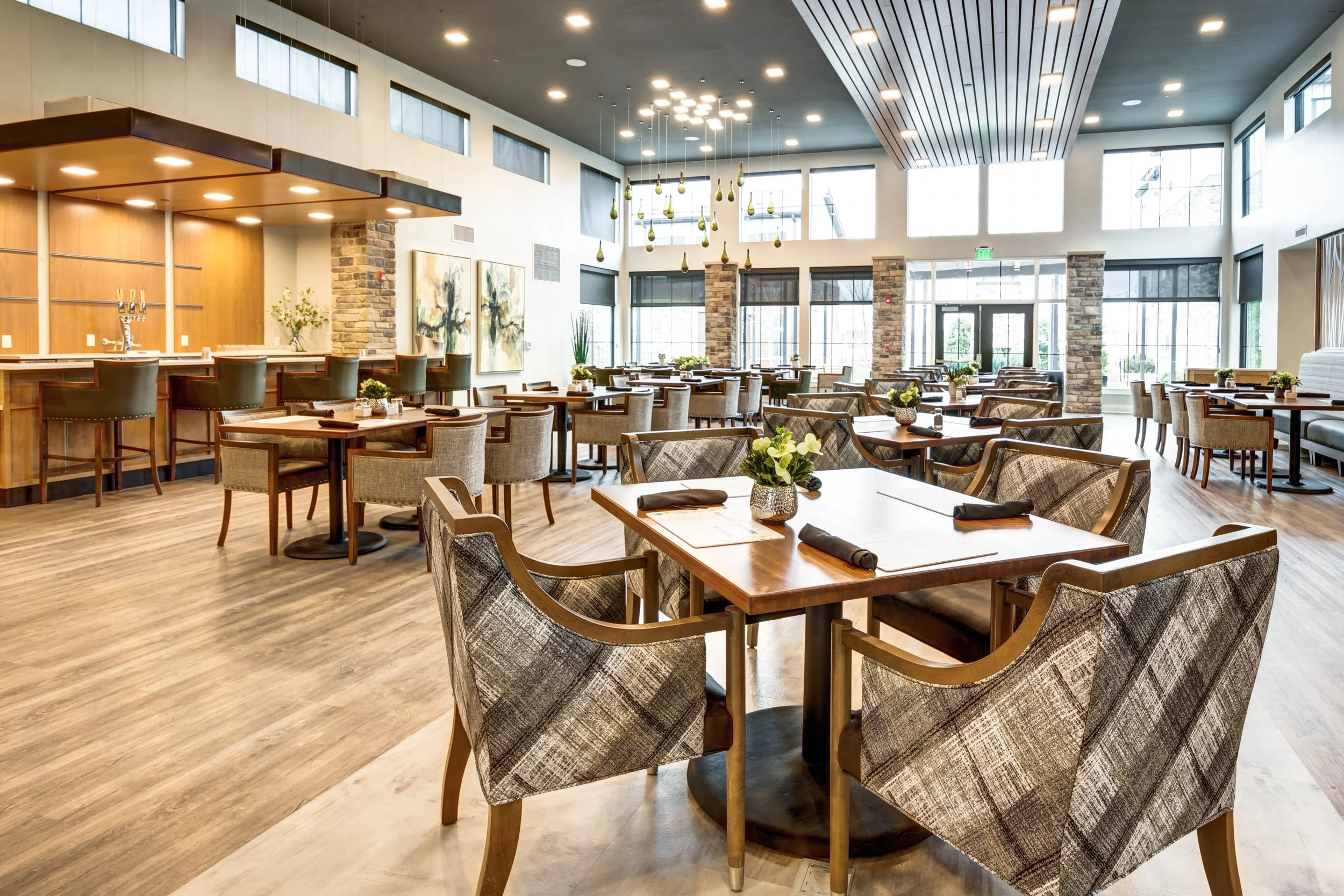
One of the most impactful upgrades we can bring to a community is the addition of a formal dining venue, a space intentionally designed for:
Special occasions
Family visits and celebrations
Elevated, chef-driven menus
A true “night out” without leaving the community
For residents who spent decades hosting holidays or going out to dinner with friends, formal dining restores a piece of identity. It reinforces the idea that aging doesn’t have to limit meaningful experiences; it just reframes them.
Formal venues also give operators a competitive edge. Prospective residents often see them as a sign of quality, care, and lifestyle.
Why Dining Variety Improves Quality of Life
Multiple dining venues aren’t just a luxury, they’re a strategic investment in resident well-being.
Choice = Autonomy
When residents decide where to eat, when to eat, and what the atmosphere should feel like, they maintain a sense of control in their daily life. That autonomy supports mental, emotional, and social health.
Spaces Shape Socialization
Different dining spaces attract different groups, rhythms, and occasions. This naturally increases social engagement, combats isolation, and strengthens community culture.
Flexibility Supports Aging in Place
As mobility, preferences, and health needs evolve, having multiple dining options ensures every resident can still participate meaningfully in community life.
How We’ve Brought These Experiences to Life
At Vessel, we’ve woven hospitality-driven dining into our senior living work for years, long before it became an industry benchmark.
We’ve designed communities that feature:
Coffee bars and bistros with café seating, open shelving displays, and counter-service models
Casual dining rooms broken into warm, human-scale dining
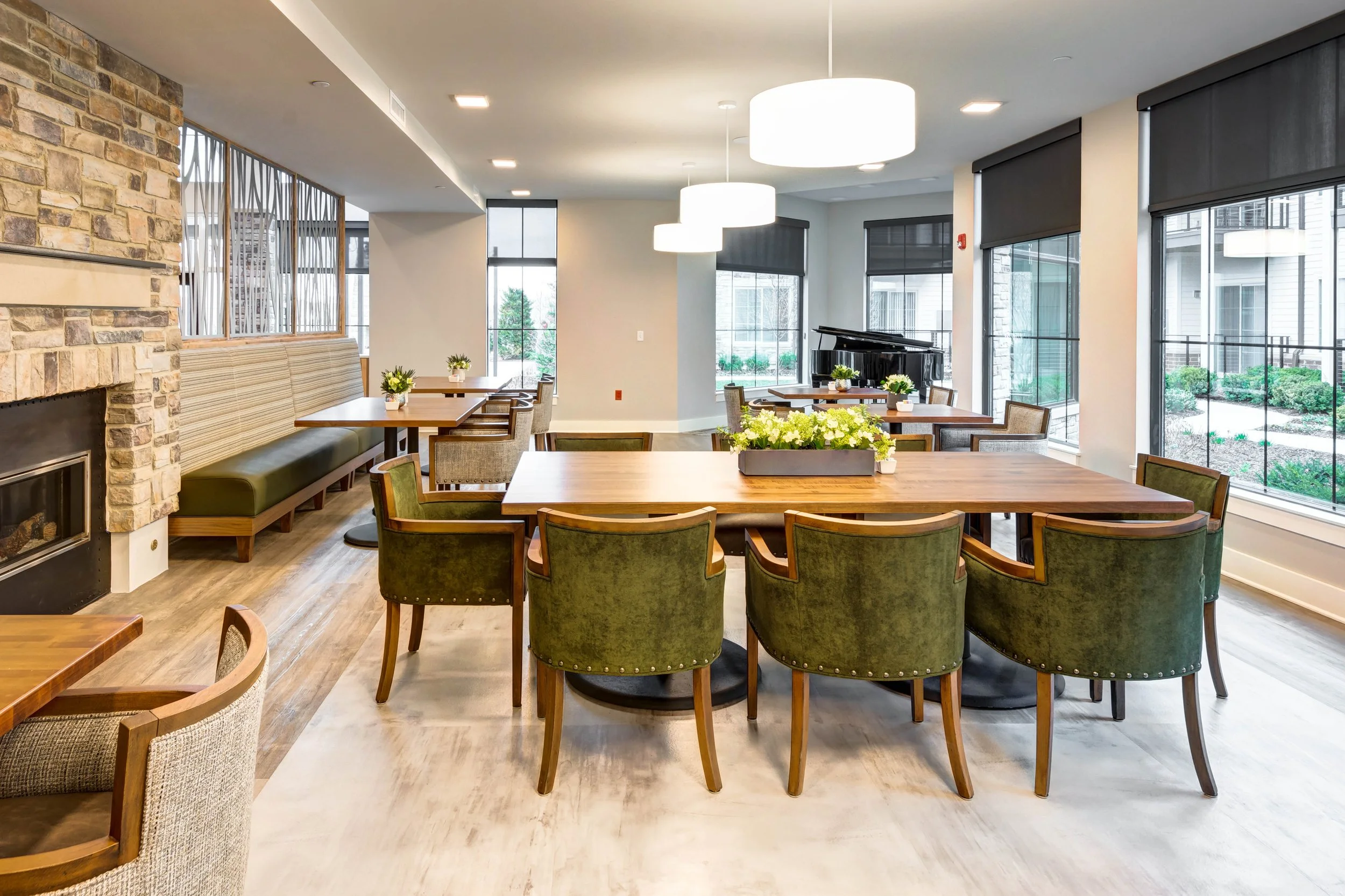
Formal venues with elevated finishes, soft lighting, and private dining areas
Outdoor dining and rooftop patios that support happy hours, seasonal events, and resident-led gatherings
Bar areas and lounge spaces designed for evening socialization, cards, games, and celebrations
Each venue serves a purpose. Together, they create a lifestyle.
These environments do more than feed residents; they give them moments to look forward to, places to build relationships, and daily rituals that feel familiar, enjoyable, and dignified.
Hospitality-Driven Senior Living Isn’t a Trend, It’s the Path Forward
As the industry looks ahead, hospitality is no longer optional. It’s the new baseline.
Communities that embrace experience-driven design, especially in dining, will be the ones that thrive. Most importantly, they’ll be the ones where residents feel at home, feel connected, and feel like themselves.
Design alone can’t rewrite the aging process, but it can absolutely elevate the quality of it. And that’s the real power of hospitality in senior living.
