Before & After — The Rozier Building
The Rozier Building has lived many lives since it was first constructed in the 1920s in St. Genevieve.
Originally built as a furniture, feed, and general store, the building expanded over time. In the 1950s, a five-and-dime was added on, and later a grocery store was added to the rear. By the early 2000s, the structure housed multiple occupants, resulting in a fragmented layout that no longer reflected the building’s original clarity or purpose.
Before:
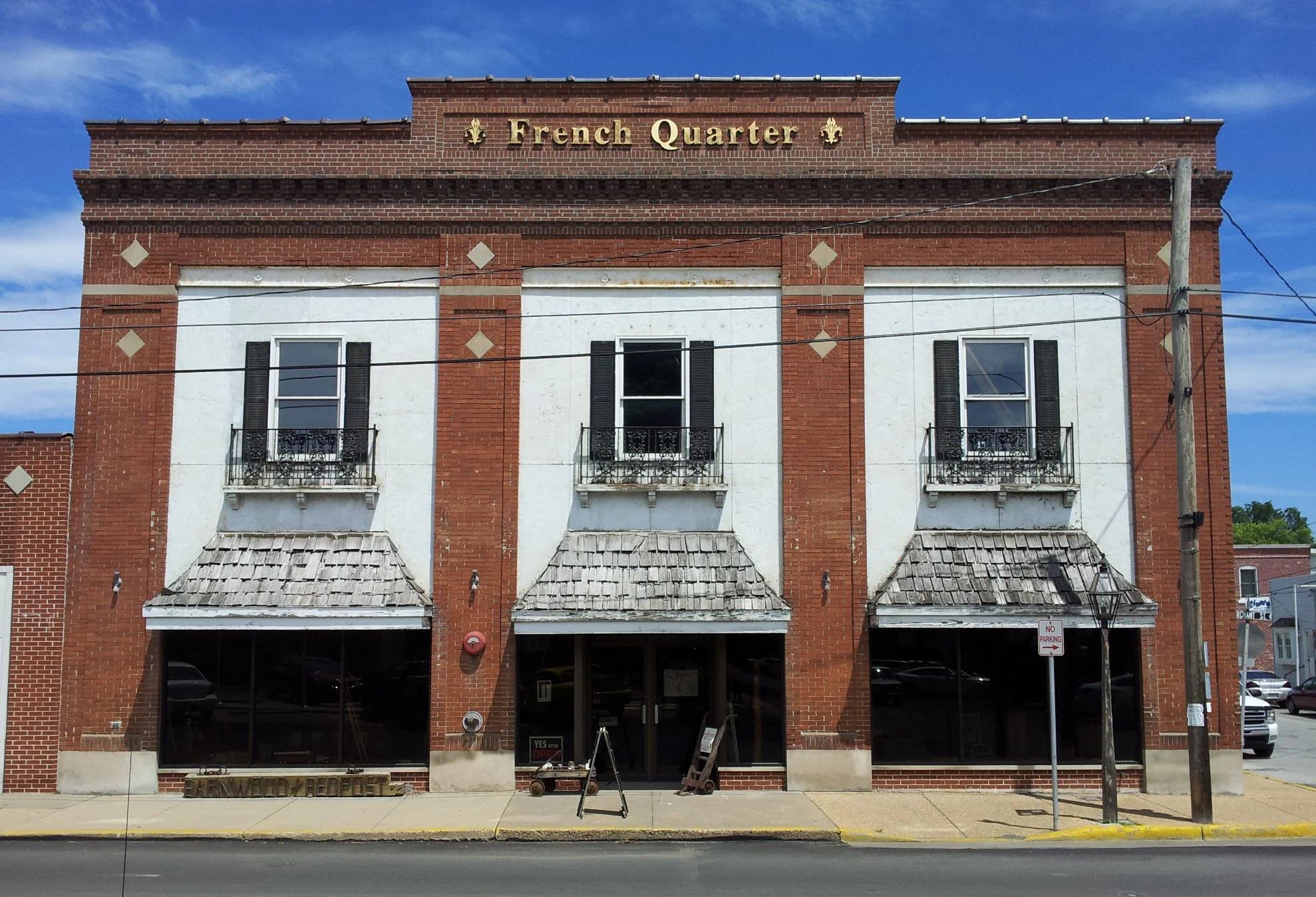
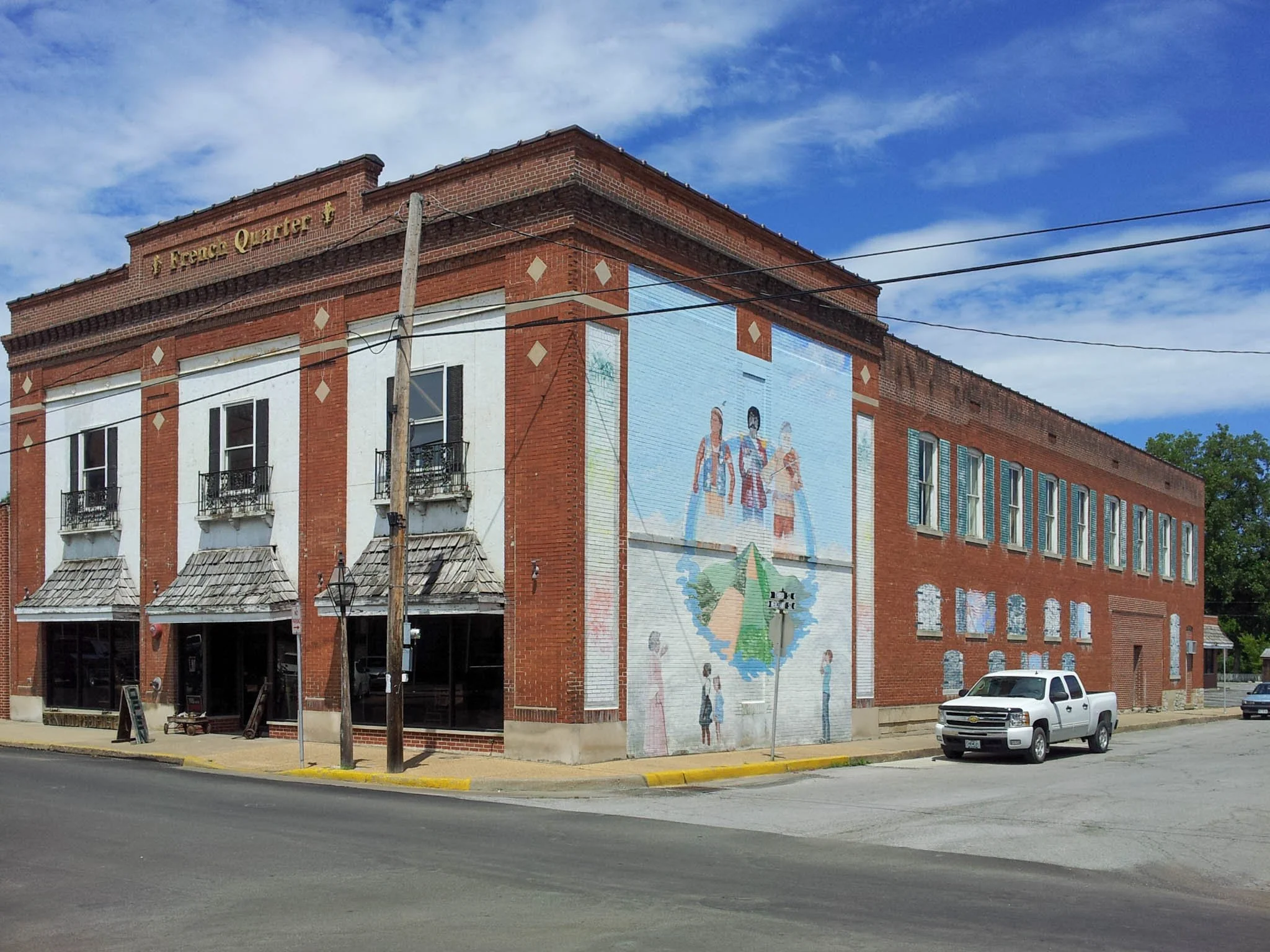
When Ste. Genevieve Parish purchased the building, the vision shifted dramatically. The goal was to repurpose the existing structure into a flexible, education-focused environment supporting multipurpose spaces, preschool classrooms, a weight room, and band and theater areas, all within the original footprint.
Our work began with master planning how these varied uses could coexist in a way that felt intentional, efficient, and adaptable. Circulation, adjacencies, and long-term flexibility were carefully studied to ensure the building could support daily educational use while remaining responsive to future needs.
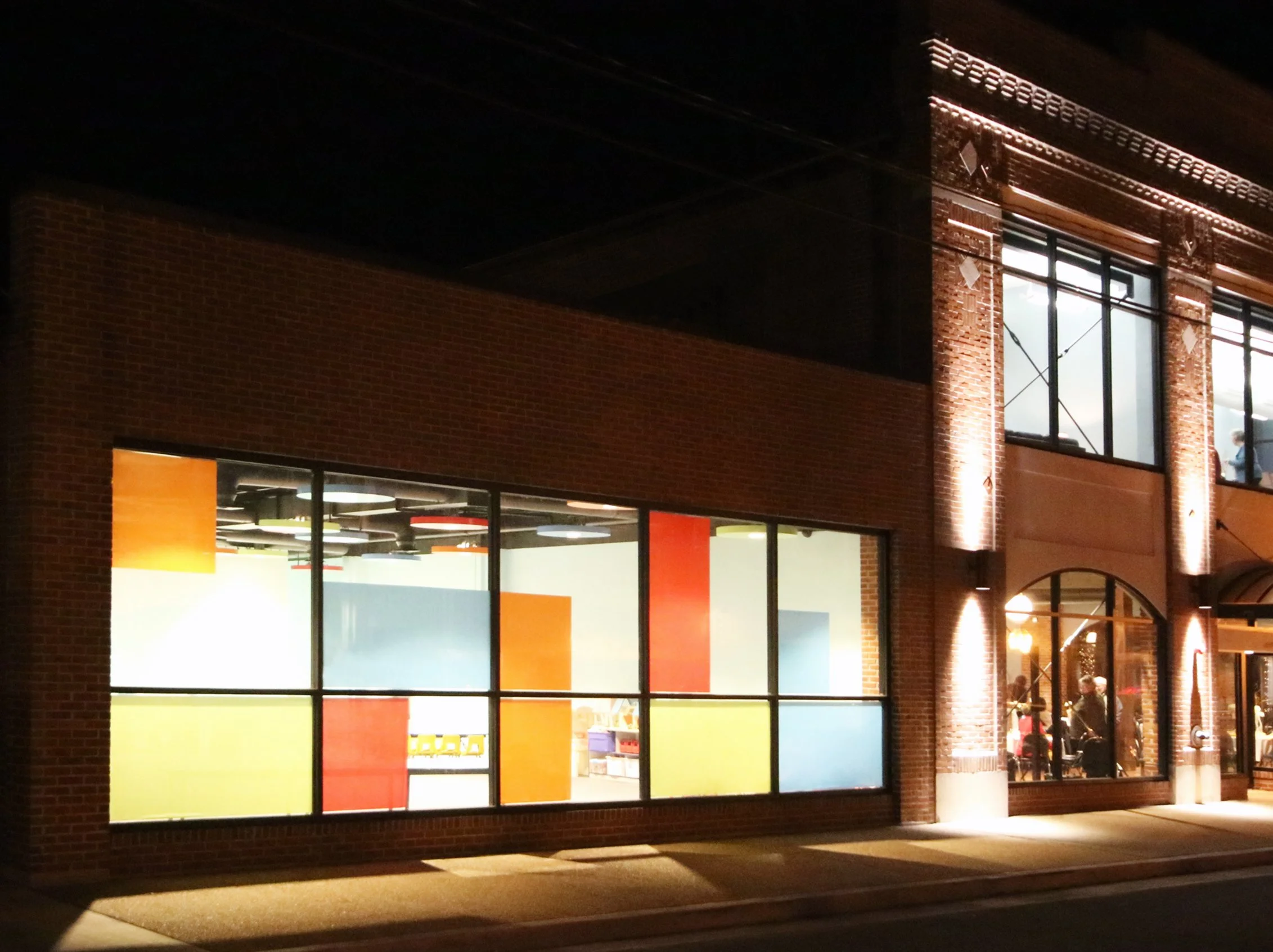
Because the occupancy group changed to an education-based use, the building was also required to meet updated structural and seismic requirements. As part of the renovation, structural upgrades were introduced to bring the building into compliance, most visibly expressed through the addition of X-bracing, which can be seen in the after photos. Rather than hiding these elements, they became an honest expression of the building’s evolution and new purpose.
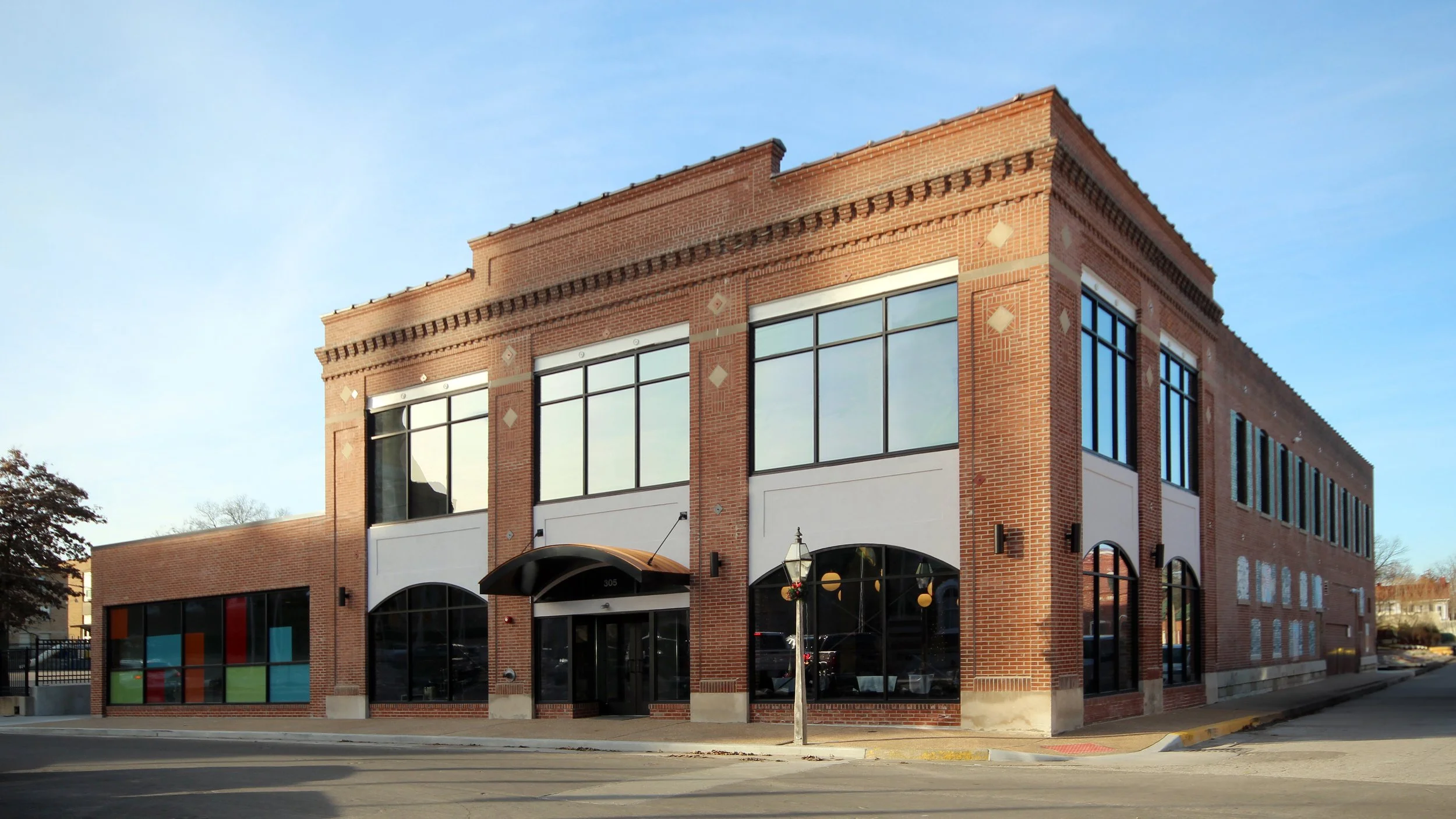
Equally important was restoring the building’s original presence. We focused on bringing the façade back to life and reopening the exterior to allow natural light into the interior reflecting the openness and transparency of the original design intent.
The result is a building that honors its past while fully supporting its present role as a place for learning, gathering, and community life. The Rozier Building stands as a reminder that adaptive reuse is not just about preservation, it’s about thoughtfully preparing historic structures for what’s next.
After: